
Executive Summary
Access to accurate, age-appropriate Reproductive Health Education (RHE) remains uneven across Ghana despite the existence of progressive national policies and legal frameworks. Adolescents continue to face significant barriers to accessing reliable information and services due to cultural resistance, religious misconceptions, weak institutional coordination, stigma, inadequate school-based support systems, and limited investment in adolescent-friendly services. These challenges also contribute to the persistence of Gender-Based Violence (GBV), poor reporting of abuse, and inadequate protection for survivors.
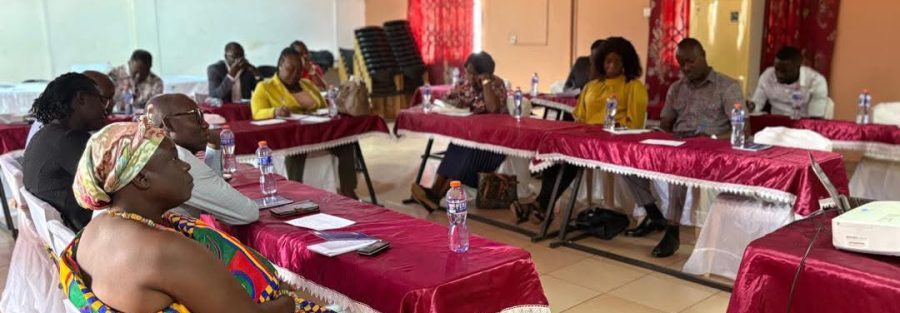
To contribute to addressing these challenges, the Alliance for Reproductive Health Rights (ARHR), through the Regional SRH/GBV Coalitions, convened two Regional Representative Dialogues in the Bono East and Oti Regions. The dialogues brought together representatives from government institutions, civil society organizations, health and education sectors, youth groups, traditional and religious leaders, media practitioners, disability organizations, and community stakeholders to identify barriers, discuss implementation gaps, and develop practical recommendations for strengthening RHE, GBV prevention, and adolescent sexual and reproductive health and rights (ASRHR).
Stakeholders reached broad consensus that Ghana’s challenge is no longer the absence of policies but rather inconsistent implementation, inadequate financing, weak accountability systems, and persistent social resistance to reproductive health education. Participants emphasized that strengthening partnerships with parents, schools, religious institutions, traditional authorities, and digital platforms will be essential to improving adolescent health outcomes.
This position paper presents the collective recommendations emerging from the dialogues and calls for coordinated policy action to ensure that every adolescent has access to accurate information, quality services, and protection from violence.
Stakeholders in photo
- Introduction
Adolescence represents a critical stage of human development during which access to accurate reproductive health information and supportive services significantly influences lifelong health and wellbeing. In Ghana, however, many adolescents continue to experience barriers to obtaining reliable reproductive health information due to entrenched cultural norms, misinformation, stigma, and limited communication between young people and trusted adults.
At the same time, gender-based violence continues to undermine the rights, safety, education, and health of women and girls. Although Ghana has enacted important legislation, including the Domestic Violence Act, 2007 (Act 732), implementation challenges remain, particularly at community level where survivors often encounter stigma, limited psychosocial support, and inadequate access to justice.
Recognizing these challenges, ARHR facilitated regional policy dialogues to identify practical solutions that strengthen implementation of existing policies while fostering stronger collaboration among institutions responsible for protecting adolescents and promoting gender equality.
- Key Issues Emerging from the Dialogues
2.1 Social and Cultural Resistance to Reproductive Health Education
Participants consistently identified social norms, cultural beliefs, and misconceptions as major barriers to reproductive health education.
Parents were recognized as the primary educators of children, yet many are uncomfortable discussing sexuality and reproductive health. Consequently, adolescents increasingly rely on peers and unverified online sources for information.
Traditional rites that previously introduced young people to responsible adulthood have gradually declined, leaving few culturally accepted avenues for reproductive health education. Stakeholders therefore emphasized the need to adapt positive cultural practices to contemporary realities while preserving community values.
Religious institutions were identified as both a challenge and an opportunity. While some religious teachings discourage open discussion of reproductive health, faith leaders remain among the most trusted voices within communities and could become influential advocates for age-appropriate reproductive health education if adequately engaged.
One participant further noted that some mission schools continue to interpret teenage pregnancy and peer influence primarily as spiritual problems rather than issues requiring comprehensive health education and psychosocial support, highlighting the need for greater awareness among faith-based educational institutions.
2.2 Weak School-Based Support Systems
Stakeholders expressed concern over the limited capacity of schools to provide effective RHE and psychosocial support.
Participants highlighted:
- Weak guidance and counselling systems.
- Limited specialised training for school counsellors.
- Insufficient school health services.
- Lack of integration of reproductive health education into everyday learning.
- Continued victimization of pregnant adolescents despite the back-to-school policy.
Participants stressed that schools should become safe environments where adolescents receive accurate information, confidential counselling, and timely referrals to health services.
2.3 Limited Adolescent-Friendly Health Services
Although adolescent health corners exist in many health facilities, participants observed that many remain unattractive, poorly resourced, and underutilized.
Young people also expressed concerns about confidentiality when accessing reproductive health services. Fear that personal information may become known within their communities discourages many adolescents from seeking care.
Stakeholders therefore emphasized the need to strengthen confidentiality protocols while making adolescent-friendly services more welcoming, accessible, and responsive.
2.4 Digital Opportunities and Risks
Participants acknowledged that today’s adolescents increasingly obtain information through digital platforms rather than traditional communication channels like the walking to adolescent friendly centers.
While the internet presents unprecedented opportunities for expanding access to reproductive health education, it also exposes young people to misinformation, harmful content, online exploitation, and cyber-enabled gender-based violence.
Stakeholders therefore called for deliberate investment in credible digital reproductive health education platforms and online safety initiatives that equip young people with accurate information while protecting them from harms.
2.5 Gaps in GBV Prevention and Survivor Support
Participants identified several weaknesses within Ghana’s GBV response systems.
These include:
- Limited legal protection for survivors.
- Absence of shelter homes in many districts.
- Inadequate psychological support services.
- Persistent stigma associated with reporting abuse.
- Community pressure discouraging survivors from seeking justice.
Particular concern was raised regarding situations where influential community members intervene to discourage legal action against perpetrators.
- Stakeholder Position
Following extensive deliberations, participants collectively affirm that:
- Every adolescent has the right to receive comprehensive, age-appropriate reproductive health education.
- Parents should be supported to reclaim their role as the first educators of their children on reproductive health.
- Religious and traditional leaders should become active partners in promoting reproductive health education and preventing GBV.
- Boys and men must be intentionally engaged as allies in promoting gender equality and preventing violence.
- Schools and health facilities should provide safe, confidential, adolescent-friendly services.
- Digital platforms should become strategic channels for delivering evidence-based reproductive health information.
- Effective implementation of existing laws is more urgent than developing additional policies.
- GBV survivors deserve accessible legal, psychosocial, and shelter services regardless of where they live.
- Policy Recommendations
Stakeholders recommend that Government and relevant institutions should:
Ministry of Education and Ghana Education Service
- Integrate comprehensive age-appropriate reproductive health education across all levels of schooling.
- Strengthen school guidance and counselling units through specialised training.
- Fully implement and monitor the Back-to-School Policy for pregnant adolescents.
- Expand school health programmes.
Ministry of Health and Ghana Health Service
- Upgrade adolescent-friendly health corners to provide confidential, youth-responsive services.
- Strengthen confidentiality standards within health facilities.
- Expand adolescent mental health and psychosocial support services.
Ministry of Gender, Children and Social Protection
- Establish district-level shelter homes for GBV survivors.
- Strengthen survivor-centred legal and psychological services.
- Increase investment in prevention programmes targeting families and communities.
National Population Council and Civil Society
- Intensify community education on the importance of reproductive health education.
- Develop digital reproductive health education platforms targeting adolescents.
- Support parents with practical communication skills on adolescent reproductive health.
- Engage chiefs, queen mothers, and faith leaders as champions for reproductive health education and GBV prevention.
Parliament and Government
- Strengthen enforcement of the Domestic Violence Act and related laws.
- Increase budget allocations for adolescent health and GBV programmes.
- Promote transparency in budget allocation and utilisation.
- Establish measurable national implementation targets for RHE and GBV programmes.
- Accountability Framework
Stakeholders recommend the following mechanisms:
- Strong intersectoral coordination among GHS, GES, DOVVSU, CHRAJ, Social Welfare, civil society, and traditional authorities.
- Periodic monitoring and evaluation using agreed indicators.
- Public reporting of progress against implementation targets.
- Transparent allocation and utilisation of resources.
- Routine stakeholder review meetings at regional and district levels.
- Strengthened data systems to monitor RHE implementation, GBV reporting, and service utilisation.
- Conclusion
The Bono East and Oti Regional Dialogues reaffirm that improving adolescent sexual and reproductive health and reducing gender-based violence require more than policy commitments they demand coordinated implementation, sustained investment, and shared responsibility across government, communities, families, schools, health facilities, and civil society.
Stakeholders believe that Ghana possesses a strong policy foundation. The priority now is to translate these commitments into meaningful action by strengthening accountability, investing in adolescent-friendly services, empowering parents and communities, engaging boys and men, leveraging digital platforms responsibly, and ensuring survivors of gender-based violence receive the protection and support they deserve.
ARHR calls upon all relevant institutions to act on these recommendations and work collaboratively to create an environment in which every adolescent can access accurate reproductive health information, exercise their rights, and live free from violence.