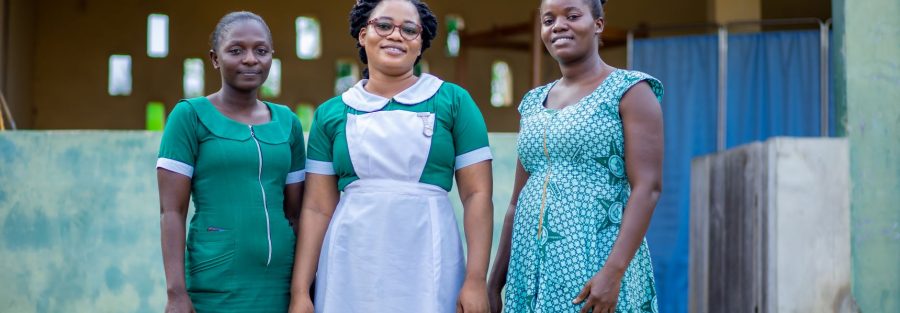
Every year on May 12 — the birth anniversary of Florence Nightingale, the founder of modern nursing, the world pauses to honour the millions of nurses who stand at the frontlines of health care delivery. This year’s International Nurses Day theme, “Our Nurses. Our Future. Empowered Nurses Save Lives,” carries a message of profound urgency — one that resonates deeply within the Ghanaian public health context. In Ghana, nurses are not merely caregivers; they are the backbone of a health system that serves over 33 million people across diverse geographic, social, and economic landscapes.
The Nurse: Ghana’s Most Visible Health Worker
Walk into any district hospital in the Northern Region, any Community-based Health Planning and Services (CHPS) compound in a rural enclave of the Volta Region, or any polyclinic in Accra’s congested neighbourhoods, and you will find a nurse. Often the first, and sometimes the only, trained health professional a patient encounter. According to the Ghana Health Service (GHS), nurses and midwives constitute over 60% of the entire health workforce. This staggering statistic speaks volumes about the indispensable role nursing plays in our national health architecture.
From administering immunisations under the Expanded Programme on Immunisation (EPI) to managing uncomplicated malaria cases, from providing skilled birth attendance that reduces maternal mortality to conducting community health education on sanitation and nutrition — nurses in Ghana do it all. They are the engines that drive the Universal Health Coverage (UHC) agenda forward at the community level.
The State of Nursing in Ghana: Strengths and Struggles
Ghana has made commendable strides in nursing education and training. The country boasts numerous nursing and midwifery training colleges spread across all regions, producing thousands of graduates annually. Specialised training in fields such as mental health nursing, paediatric nursing, critical care, and community health nursing has gradually expanded the scope of services that nurses can offer.
Yet, despite these advances, Ghana’s nursing workforce faces formidable challenges that threaten the sustainability of our health system:
- Brain Drain and Emigration: Ghana continues to haemorrhage skilled nurses to more economically attractive destinations like the United Kingdom, the United States, Canada, and Australia. Recent assessments indicate that while Ghana has improved its overall health workforce density, many areas, particularly in the north and in specialized services, still fall below the WHO recommended threshold of 44.5 health workers per 10,000 population. This exodus, while understandable from an individual standpoint, threatens to hollow out our health delivery infrastructure if left unaddressed.
- Inequitable Distribution: Rural and deprived communities, particularly in the Upper East, Upper West, North East, Savannah, and Oti regions, continue to suffer acute shortages of qualified nurses. Deployment policies, infrastructure deficits, and inadequate incentive packages make postings to these areas unattractive, creating a two-tier health system where geography determines the quality of care one receives.
- Inadequate Remuneration and Poor Working Conditions: Many nurses in Ghana operate under extremely difficult conditions, overcrowded wards, lack of essential medical supplies, outdated equipment, and persistent delays in salary payment. These conditions not only compromise care quality but also contribute to burnout, low morale, and eventual emigration.
- Limited Continuing Professional Development (CPD): Access to structured CPD opportunities, especially for nurses in rural settings, remains limited. Without continuous skills upgrading, nurses may struggle to keep pace with evolving medical knowledge, new treatment protocols, and emerging disease threats.
What ‘Empowerment’ Truly Means for Ghana’s Nurses
This year’s theme calls us to move beyond rhetoric and take concrete, measurable steps toward nurse empowerment. In the Ghanaian context, empowerment must be understood along three critical dimensions:
- Political Empowerment — Nurses must have a stronger voice in health policy formulation. National health policies, from the National Health Insurance Scheme (NHIS) reform to hospital infrastructure development, should meaningfully incorporate the lived professional experiences of nurses. The Ghana Registered Nurses and Midwives Association (GRNMA) and allied professional bodies must be given genuine seats at decision-making tables.
- Professional Empowerment — This means investing robustly in nursing education, expanding postgraduate specialisation pathways, enabling nurse prescribing in appropriate contexts, and formally expanding the scope of practice for advanced nurse practitioners. Ghana’s Nurse Practitioner cadre is still relatively nascent to holds enormous potential to fill critical care gaps, especially in underserved communities.
- Economic Empowerment — Competitive and timely remuneration, housing incentives for rural postings, access to vehicle and equipment loans, and meaningful career progression structures are non-negotiable if we are serious about retaining our nurses. The government’s Ghana COVID-19 Alleviation and Revitalisation of Enterprises Support (CARES) lessons taught us that targeted economic interventions save systems; the same logic applies to our health workforce.
Empowered Nurses and the Life-Saving Evidence
The claim that empowered nurses save lives is not merely inspirational — it is evidence-based. Studies across sub-Saharan African health systems, including in Ghana, consistently demonstrate that:
- Adequate nurse staffing ratios are associated with significant reductions in patient mortality rates in both medical and surgical wards.
- Community health nurses operating within well-resourced CHPS compounds achieve substantially better outcomes in maternal and child health indicators, including reducing under-five mortality and stunting rates.
- Midwives empowered with appropriate skills, equipment, and referral linkages are among the most cost-effective interventions for reducing Ghana’s still-elevated maternal mortality ratio.
- Nurses trained in the Integrated Management of Neonatal and Childhood Illnesses (IMNCI) approach demonstrably reduce case fatality rates from pneumonia, diarrhoea, and malaria, the leading killers of Ghanaian children.
Ghana’s own experience during the COVID-19 pandemic vividly illustrated this truth. It was nurses working on isolation wards, managing critical care units, administering the mass vaccination campaign, who held the line. Their courage, competence, and commitment were decisive. But they did so under extraordinary pressure, and many paid a heavy personal price in terms of mental health, physical exhaustion, and occupational exposure. We owe them far better.
A Call to Action: What Must Ghana Do Now?
As we mark this International Nurses Day, several urgent calls must be placed before our government, health institutions, development partners, and Ghanaian society at large:
- Fully fund and implement the Ghana Human Resources for Health Policy to ensure strategic recruitment, equitable distribution, and retention of nurses at all levels.
- Review and reform bilateral health worker recruitment agreements with destination countries to ensure ethical recruitment that does not strip Ghana of its critical nursing workforce without adequate compensation or training support.
- Expand mental health and psychosocial support services for nursing staff, recognising that moral distress and burnout are occupational hazards that require institutional, not merely individual, responses.
- Accelerate digital health integration in nursing practice, including the rollout of electronic health records, mHealth applications, and telemedicine, to extend the reach of nurses in remote areas and reduce administrative burdens.
- Celebrate and publicly acknowledge nursing excellence through national awards, media recognition, and community appreciation programmes that restore the dignity and social prestige that nursing professionals deserve.
Conclusion: Our Nurses Are Our Future
The theme of this year’s International Nurses Day is not a slogan — it is a strategic imperative. Ghana cannot achieve the health outcomes enshrined in the Sustainable Development Goals (SDGs), the Africa Health Strategy, or its own Ghana Beyond Aid health vision without a robustly empowered nursing workforce. To invest in our nurses is to invest in the future health, productivity, and resilience of our nation.
On this day, let us honour every nurse who wakes before dawn to open a rural health post, every midwife who guides a mother safely through labour by lamplight, every community health nurse who treks across difficult terrain to reach an unvaccinated child, and every critical care nurse who fights through exhaustion to pull a patient back from the precipice.
They are our nurses. They are our future. And when we empower them — truly, structurally, and sustainably — they save lives.